

Acne does not care how old you are. It shows up on teenagers, adults, and everyone in between. And if you live in Canada, where the weather swings from dry winters to humid summers, your skin has even more to deal with.
The good news? A consistent acne care routine can make a real difference. You do not need a dozen products or a complicated system. You need the right steps, the right ingredients, and a little patience.
This guide breaks it all down for you.
What is Acne and Why Does it Keep Coming Back?
Acne forms when your pores get clogged. Oil, dead skin cells, and bacteria build up inside the pore and cause inflammation. That is what creates pimples, blackheads, and cysts.
Several things trigger acne:
- Hormonal changes (puberty, menstrual cycles, stress)
- Excess sebum production
- Bacteria on the skin surface
- Diet, particularly high-sugar and high-dairy foods
- Touching your face frequently
The reason acne keeps returning is usually that the root cause never gets addressed. People treat the breakout but not the habits or environment that caused it.
The Real Reason Most Acne Care Routines Fail
Most people either do too much or too little. Both cause problems.
Over-washing your face strips the skin’s natural barrier. Your skin responds by producing even more oil, which leads to more breakouts. Skipping moisturizer does the same thing. Dry, irritated skin is actually more vulnerable to acne.
Using too many active ingredients at once is another common mistake. Mixing strong acids, retinol, and exfoliants without knowing how they interact can damage your skin barrier and make acne worse.
The biggest mistake of all? Inconsistency. Acne care products need time to work. Switching products every two weeks means your skin never stabilizes.
What a Good Skincare Routine for Acne Actually Looks Like
You do not need ten steps. You need the right four.
Morning Routine
- Cleanse – Wash your face with a gentle cleanser suited for acne-prone skin. Remove overnight oil and bacteria without over-stripping.
- Treat – Apply a targeted treatment if needed, such as a spot treatment with tea tree oil or a lightweight serum.
- Moisturize – Use a non-comedogenic (non-pore-blocking) moisturizer. Even oily skin needs hydration.
- SPF – Sunscreen is non-negotiable. Many acne treatments increase sun sensitivity, and UV exposure can darken post-acne marks.
Night Routine
- Cleanse – Wash off the day: sunscreen, pollution, and excess oil.
- Treat – This is the best time for active ingredients. Your skin repairs itself at night.
- Moisturize – Use a slightly richer moisturizer at night if your skin tends to get dry.
Keep it simple. Stick to it every day.
Natural Ingredients Worth Knowing in Acne Care
Some of the most effective ingredients for acne care come from nature. Here is what actually has a reputation in the skincare world.
Neem
Neem has been used in traditional skincare for centuries. It contains compounds that may help reduce bacteria on the skin surface and support a cleaner complexion. It is also known for its gentle action, making it suitable for daily use on acne-prone skin.
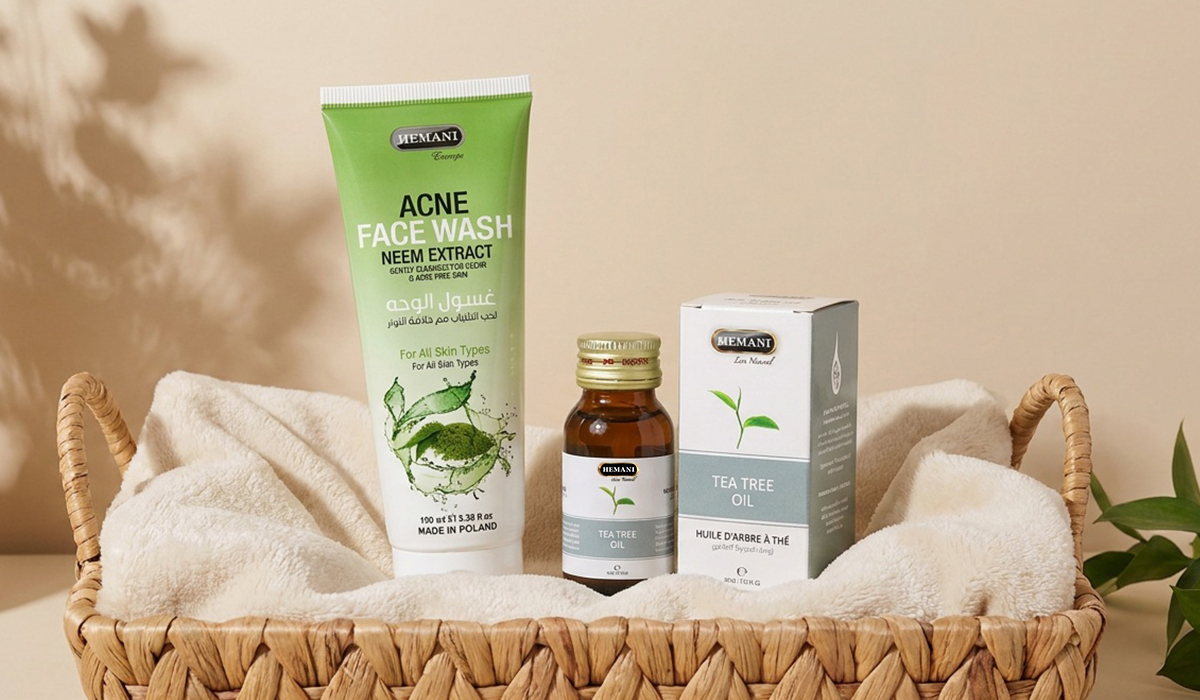
Starting with a neem-based face wash is one of the simplest steps you can take. The Hemani Face Wash Acne with Neem Extracts is formulated specifically for acne-prone skin. It cleanses deeply, helps balance the skin, and does not leave your face feeling tight or stripped.
Tea Tree Oil
Tea tree oil is one of the most researched natural ingredients for acne care. It is known for its antimicrobial and antiseptic properties. Many people use it as a spot treatment on active breakouts or mix a small amount into their routine as a targeted step.
If you want to try it, Hemani Tea Tree Oil is a clean, straightforward option available in Canada. It is concentrated, so a little goes a long way.
Salicylic Acid
Salicylic acid works by getting inside the pore and dissolving the buildup that causes blockages. It is commonly found in cleansers, toners, and serums. It works well for blackheads and whiteheads in particular.
How Often Should You Use Acne Care Products?
Frequency matters as much as the products themselves.
- Cleanse twice a day, morning and night
- Use spot treatments only on active breakouts, not as an all-over application
- Exfoliate one to two times a week maximum
- Apply SPF every single morning, even on cloudy Canadian days
Always patch test a new product before applying it all over your face. Apply a small amount to your inner arm or jaw and wait 24 hours. If no reaction appears, it is generally safe to use.
Give any new product at least four to six weeks before judging whether it works. Skin cell turnover takes time.
When More is Not Better: Possible Side Effects of Overuse
Using acne care products too frequently or in high concentrations can backfire.
Tea Tree Oil
Tea tree oil is potent. Using it undiluted or too often may cause redness, dryness, peeling, or irritation, especially on sensitive skin. Always dilute it before applying it directly to your face. A common approach is mixing one to two drops with a carrier oil or moisturizer before use.
Strong Cleansers
Washing your face more than twice a day with an active cleanser can strip the skin barrier. This may lead to increased oil production, sensitivity, and more frequent breakouts, the opposite of what you want.
Exfoliants
Over-exfoliating removes too much of the skin’s protective layer. Signs include tightness, shininess, stinging, or sudden sensitivity to products that never bothered you before.
If you experience any of these reactions, scale back immediately. Let your skin recover with gentle, fragrance-free products for a week before reintroducing activities.
Acne Care Tips for Canadian Skin and Climate
Canada’s climate creates specific challenges for acne-prone skin.
In winter, cold air and indoor heating pull moisture out of your skin. Dehydrated skin produces more oil to compensate, which can trigger breakouts. A good hydrating moisturizer becomes even more important during these months.
In summer, heat and humidity increase sweat and sebum production. Lightweight, non-comedogenic formulas work best during warmer months.
If you live in cities like Toronto, Vancouver, or Calgary, pollution is also a factor. Pollution particles sit on the skin surface and contribute to clogged pores. A thorough evening cleanse helps remove these before they cause damage overnight.
Adjusting your routine slightly with the seasons is not overcomplicating things. It is just paying attention to what your skin actually needs.
FAQs
Is tea tree oil good for acne?
Tea tree oil is widely recognized for its antimicrobial properties and many people include it in their acne care routine as a spot treatment. It may help reduce the appearance of active breakouts when used correctly and in the right concentration. Always dilute it before applying to the skin.
What face wash is best for acne-prone skin?
Look for a face wash that cleanses without over-stripping. Ingredients like neem, salicylic acid, or zinc are commonly used in formulas made for acne-prone skin. Avoid anything heavily fragranced or full of harsh detergents.
How long does it take for a skincare routine to clear acne?
Most dermatologists suggest giving a new routine at least six to eight weeks before expecting visible results. Skin turnover takes time. Switching products too soon resets the clock every time.
Can I use neem on sensitive skin?
Neem is generally considered gentle, but every skin type is different. If you have sensitive skin, patch test any neem-based product first and introduce it gradually. Start with once daily use and monitor how your skin responds.